Showing posts with label caregivers. Show all posts

Wednesday, January 23, 2013

Quality vs. Quantity of Life


As I watched both of my Grandmothers in the final stage of their lives, one being 94 years old and the other being 90, I clearly can see that the most important thing that my family can do for them is keep them comfortable.  Even though their paths to this stage of their lives have been very different, when we visit with either one of them they both frequently express their desire for their life to be over.  You might read that and think they are just depressed and need treatment, but I can assure you that, especially for my older grandmother, this is not the case.  They both also speak frequently about how they enjoyed their life and are proud of the family that they have.  They simply are tired, their bodies are worn out, they are ready to rest.
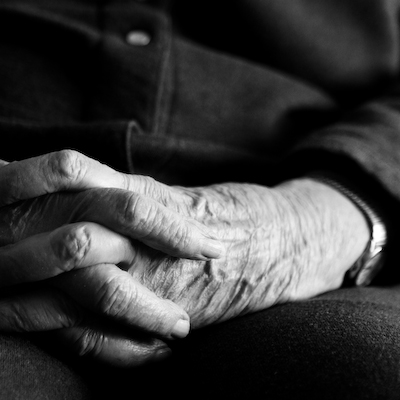
Inevitably the decisions about their care changes because of this.  It becomes necessary to consider quality of life instead of quantity of life.  What I mean is the goal of further treatment changes from trying to keep them alive to keeping them comfortable and content for the remainder of their lives.   It means as new or continuing health issues arise, we now ask ourselves what is the best treatment to keep them comfortable.  Thankfully my family is wonderful and the decision to change the focus of their care is agreed upon without arguments or hurt feelings.  Having helped too many families to count through this change in treatment, I know that my family is very fortunate to be blessed with this cooperation. Some families are on opposite sides of this fence.  Many times when children do not live nearby it is especially hard to understand this change in focus because they have not watched the aging of their parent first hand.  If you are the sibling that is the primary caregiver, you need to make every effort you can when changes in condition begin to keep in close contact with your brothers and sisters.   Explain the changes you are seeing, ask them for suggestions, tell them what the doctors are saying, and decide on treatment plans together.   You do not want to call them up one day and try to make them understand changes that have been progressing over time in just one phone call.  It will overwhelm them and they will become defensive and feel the need to protect their parent.


Keeping the lines of communication open through the aging process with those closest to you and your loved one will hopefully make these transitions easier on everyone.  Each of you may have different ideas about what quality of life may mean to you.  Allowing each person to express their thoughts enables everyone to hear all sides but try to keep in mind that just because your loved one is old it does not always mean that they are incapable of making these decisions themselves.  It is ultimately about what they want, not what you want...

Quality of care in the last stage of life = Aging with Ease!

Thursday, November 29, 2012

Share Your Stories...


Today I went with my mother to visit my grandmother.  Not the same grandmother that I have mentioned in other posts.  This is my mother's mother and she is 90 years old.  She lived with my parents for more than 10 years and recently, due to health decline, has moved into a long-term care facility.  These last few months have been very difficult to watch as my grandmother began to fail both physically and mentally.

My grandmother has always been a very strong-willed person.  When things needed to get done, you could count on her to do it.  She always kept her word and could be depended on when you needed her.  She also was directly open about telling you what she thought about things.  Most times, she would express her opinions with love, but there were several moments that I can easily think of where she told you what she thought without any regard to what the reaction might be.  Don't get me wrong, my grandmother is a wonderful person.  From her I get my strength to keep moving forward, my stubbornness, my need to always be on time, my work ethic and my confidence.  From her I also inherited the family gene to worry.  She would worry endlessly about everything.  I also inherited from her the talent to keep personal struggles to myself.  Sometimes these two traits can be good things, but sometimes, as you can imagine, they are not.

I think that those last two traits are why, as her mind begins to fail, she spends a lot of her time now paranoid that people are talking about her, worrying that they are going to throw her out of her room and suspicious that they are out to get her.  It is very difficult some days to visit her.  You never know what you are going to be walking into.  One day, she is very pleasant and speaks very highly of the staff who help her.  The next time she spends the whole visit begging us to take her home.  The strain and guilt that this puts on my mother does not go unnoticed.  I know she wonders if things would be better for my grandmother if she did take her home again, but the fact is that my grandmother needs someone with her 24 hours a day.  Watching over her medications, her health and her hygiene.  These are not things that my mother is able to provide for her.

I am never sure what to say to my mother after a visit with my grandmother.  As a nurse in geriatrics, I understand the changes that are going on with my grandmother.  I have seen this progression so many times.  That does not mean that it makes it any easier to cope with it.  It makes you feel awful to see someone that you love, who was once so strong and vibrant, now look so sad and frail.  The only comfort I can give my mother is to reassure her that my grandmother is getting good care.  That she is in a good facility where people do really care about her.  Having worked in long-term care facilities before, I know the signs of quality care and they are all present at her facility.  My mother knows this as well and that does bring her some peace of mind.

My family is very blessed to have had my grandmother in our lives for so long.  Many families are not so lucky.  My hope for her is to find some peace in her own mind as she reaches the last stage of her life.  Perhaps the anxiety she feels is actually a result of exactly that - maybe she is afraid to die?  I don't know what the right answer is to this.  What the best course of action should be.  What we should say to her when she asks us to take her home.  I just answer her honestly about why she needs to be there and hope that some day soon she will accept this stage of her life.

If you are a caregiver who has gone through this transition with your loved one, I would love to hear your stories...

Sharing your stories helps the process of Aging with Ease!


I originally posted this in November 2011 on my first Aging with Ease blog, my grandmother passed away in February 2012 at peace with her family at her side.  Her passing would be the first of three close family members leaving me in 2012.  Let's just say this year has been very long, sad and unending.  As the year finally draws close to the final month all I can really say is that my family knows I love them.  Death is final and there is nothing you can do to change it.  All you can do is just love them...

I am working on finding a way to regain some motivation in my life, as my grandmothers and my father taught me to do.  It has been difficult since the three people I have lost were also the three people who motivated and inspired me the most.  I hope any followers that I have are patient with me as I try get back into it. 

Monday, October 8, 2012

Geriatric Care Management

So today I learned about a service that I have not had any experience with.  It is called Geriatric Care Management.  Some of you may already be familiar with this service, but it intrigued me because of my lack of knowledge about it.  So I did some research about it. This service offers support for families caring for older adults.  Many of people who are faced with caring for a spouse or parent who is declining in their health really have no idea where to begin to look for help.  Those difficulties are escalated when you are a child of an older adult and live miles away.   The day-to-day care that is needed can leave you exhausted and feeling depleted to even have the energy to look for help.

Geriatric Care Management offers care managers that specialize in social services. They assist in finding the help you need based on your individual situation.  Their goal is to help older adults find the best quality of life physically, mentally and socially.   If you are looking for help finding the right long-term care or assisted living facility, they can help you with that process.  If you need someone locally to check in regularly on a loved one, they can provide that service.  They will advocate for any needs that will assist in achieving an improved quality of life for the older adult as well as for the caregiver.

Geriatric Care Managers charge clients in a variety of ways, but typically their hourly rates are between $50-$200 an hour.   Medicare, Medicaid and private health insurance very rarely pay for these costs; long term care insurance might, but most often this is an out-of-pocket cost.  I know that sounds expensive, but when you consider the convenience and security they provide, the cost can seem worth it.  Actually, Care Managers usually save families money despite being an out-of-pocket cost because their needs assessments align an individual’s present condition with only those services that are necessary at that point in time.  This prevents unnecessary fees from home care providers and assisted living residences.

This service is worth checking out if you are struggling to decide the best way to provide care for an aging adult.  The first step is to locate one and simply have a phone conversation with them about different ways that they might be able to help your situation.  A simple Google search for Geriatric Care Management will help you easily locate one near you.  If you decide it is worth the investment, they will come to meet you and your loved one to perform a complete assessment; physically, mentally, financially and socially.  Together you create a plan to manage care.

Like I said before, I do not have any first hand experience with this service but it appears to be a very useful resource in assisting caregivers to manage care.  If you have ever used this service or know of someone who did, I would be very interested to hear what the experience was like.  Did they own up to what they offer?

Finding the right kind of help that is available for you is vital to Aging with Ease!

Thursday, September 27, 2012

A Visit With My Grandmother


This weekend I was visiting my grandmother who now, at the age of 95, has recently moved into a skilled care setting.  I was sitting there talking with her and bringing her up to date on the happenings in our family as I frequently have to do when I go see her and it occurred to me that my grandmother is the essence of Aging with Ease.  She is the true inspiration for why I began writing and trying to help others.  She is the reason that I care and respect older adults the way that I do.  I have watched her progress from the vibrant person who would always be ready for play to the old woman who now mostly sits in her chair, content with her life and herself the whole way through.  It is her attitude toward life that has aided her the most in gracefully going through the aging process.

I can remember when I was 12 years old and my grandfather became ill with cancer.  I can clearly recall the way in which my grandmother cared for him with respect, love and laughter.  Never changing the way she loved him or how they communicated with each other.  It always stayed with me how she faced the reality of the situation head on, would tell you what she thought about it and then just simply do what needed to be done.  There was never a doubt in her mind, at least not that I saw, of what she should do, care for and love him.  Of course, she would be sad sometimes, but it never held her back; she seemed, to me, to gain strength from the hard times.

Not long after my grandfather passed away is when she decided it was time to sell her house and move to a retirement community, there was no changing her mind.  She knew she could no longer care for the house any longer and the memories that she shared with grandfather in the house that he built for her was just too much.  It was time to move on!  Our family would discuss with her other possible options besides living in a retirement community but her mind was set.  She would say: "This is what I want to do, I don't want to live with my children."  So everything was packed up and the house was sold.

My grandmother transitioned through every level of care within this retirement community over a span of about 18 years.  With every move, she accepted it with ease and trust that she would be taken of even though with every move she was slowly losing her sight, her hearing and eventually her mobility.  She never once doubted her faith or her family.  She would find laughter in the situation and was always so very grateful that we were there for her.   So thankful we were there to make sure that everything would be done the way she would want it and that the things that were most important to her stayed with her.

Now, as she sits in her favorite recliner, unable to see anymore and hardly able to move with out help, all she prays for is a peaceful end to her life.  Not because she is sad or depressed.  If you would meet my grandmother, you would know that she certainly is none of those things.  My grandmother even at the age of 95 could still be the life of a party.  She hopes for the end because she has lived her life to the fullest.  She has no regrets.  She has lead a happy and full life by having fun and helping others.  She is simply just tired, her body aches and she cannot do the things that she once did.

She has gone through the aging process with grace.  I can only hope to follow in her footsteps, even just a little.  In my work I have seen the direct result of negative attitudes on a person's health.  The mind is the most powerful tool you have in overcoming challenges in your life.  She showed me how to always look for something to laugh about, especially if it is about yourself.  She showed me to just let it go.  She showed me that if you can't change what is happening, then find a way to handle it but keep moving forward.

I am truly blessed to have had a person like this in my life.  I think there are probably many people that don't.  All you can do is be responsible for yourself and your own attitude.  You cannot change the way other people think or behave.  The most you can do is maybe make them laugh, which sometimes is all that they may need to improve their attitude, at least for a while...

Finding joy in your life is the essence of Aging with Ease!

  • When I originally made this post in November 2011, little did I know at the time that a few short months later my grandmother would get exactly what she was praying for.  She passed away on May 1, 2012.  Thanks to the wonderful nursing staff where she lived she died peacefully with a photo of my grandfather right beside her and her music playing, just the way she wanted it.  I miss her everyday!

It Might Be Time to Step In...


As a child of aging parents, it can be difficult to know when your parents can no longer manage on their own.  Your mother or father will become very adept at keeping it looking good.  You will become very good at looking the other way.  It is not easy to look at your parent as someone who needs help with their activities of daily living.  Parents are the people you turn to for support, advice and strength - not the other way around.  On top of that, your parent will most likely become upset with you if you even suggest that they cannot manage on their own anymore.  No one enjoys confrontation, especially with our parents.

Some of the sure signs that someone may need to step in are easy to spot, if you are looking for them.
  • Things in the house are out of order from the normal (laundry piling up, dirty dishes, messy floors, etc.)
  • Mail piling up and bills not being paid
  • Body odor/ Poor hygiene
  • Frequently losing or misplacing things
  • Forgetting to go to appointments
  • Spoiled foods in the refrigerator
If you notice some of these signs, you need to take a closer look.  There are numerous reason that these things could be occurring.  Pain, fatigue, or memory loss just to name a few.   As uncomfortable as this discussion may be, it needs to be done.  Avoiding it until the situation becomes a crisis will decrease your family's control of the decisions that need to be made.

If you have siblings, you need to involve them in these discussions.  This is a family matter; it should not completely fall on the shoulders of one child.  Typically one child will become the primary care taker for your parents but that does not mean that all the decisions fall to you. 

If you are an only child, seek advice and guidance from other family members.  If you feel like you have no one to help you with this problem, you can look for support online, your parent's physician, your pastor or your local Area Office of Aging. 

Expect confrontation when you approach your parent about these concerns.  Try to keep your cool.  Continue to talk with them calmly and respectfully.  It may need to be brought up more than once until you are able to have on honest conversation with them about the changes that you are seeing.

Knowing when to step in aides older adults' ability to experience Aging with Ease!

Saturday, September 22, 2012

Choose Your Battles Wisely

When you are the caregiver for someone, it is essential that you choose your battles wisely.  Caring for someone suffering from dementia, brings times when you will find yourself having the same frustrations with them over and over again.  This is not something they can change.  This is something you must change about yourself and how you handle the situation.

For example, a frequent concern my client's families come to me about is their loved one's refusal to bathe.  Most of us probably shower on a daily basis.  Prior to their diagnosis of dementia, so did your loved one.  It comes as a shock that this very basic activity of daily living is something that they no longer want to or are able to do. 

This can be very frustrating for some caregivers.  I try to help the caregiver realize that this is an issue they have to get over.  If you look at your loved one's current level of activity, it is probably significantly less than it once was so a bath every day is really not necessary.  They probably hardly ever break a sweat.  Unless there are incontinence problems, they have an odor or they have sores, the need for daily bathing is a routine that can be changed.  This is a daily argument or frustration that you could avoid.  Another thing to consider is home health care; in my experience, people are more likely to listen to a stranger that they recognize as a care taker than their own family when it comes to personal hygiene.  If you try to look at it from the patients point of view, it would feel degrading to some degree to need help from your spouse or your children to bathe. 

Another example, which is also a chronic problem that I hear, is difficulty having your loved one with dementia change their clothes.  How many of us wear the same outfit two days in a row?  Not anyone that I know.   So why do so many dementia patients develop this habit?  I don't have the answer to that question but it occurs none the less.

Rather than arguing with them about having worn that outfit yesterday or repeatedly trying to explain that their clothes need to be washed, a simpler solution might be to just remove the clothes they had on that day from their site when they get ready for bed at night and to lay out a new outfit for the next day the night before.  Seems like an obvious solution but you would be surprised at how many caregivers have never thought to do that.  Especially if it is a husband and wife dealing with this situation, they have lifelong habits and routines that have always worked for them and because of the progression of dementia those routines must all change.   Again this is also an area where home health care could offer relief for you in the daily care of your loved one.

I could go on and on with examples of ways that you could try different approaches to the ever-changing challenges of dementia.  The point I want to make the most is that you choose you battles wisely.   Attempting to argue with someone with dementia or trying to make them understand something that they are no longer able to understand or remember is a losing battle that will only make you, the caregiver, feel bad in the end.  The progression of dementia cannot be stopped or controlled not matter how hard you try.  Remember to try to enjoy each moment that you can no matter how brief they may be.  Spending your time trying to get them to understand something when they are no longer able to is a waste of your precious energy.


Choosing you battles wisely promotes Aging  with Ease!

Wednesday, September 5, 2012

Exploring Personal Care

Today I would like to explore Personal Care Living, formally known as Assisted Living.  This level of care is the in-between stage that comes after independently living in your home or apartment but before the need for skilled long-term care.

Personal Care settings offer 24-hour nursing staff, prepared meals, laundry services, housekeeping services, medication administration, health monitoring and activities.  Sounds kind of like long-term care living, but there is a big difference.  Residents at this level of care are still able to mostly perform their own activities of daily living like bathing, dressing, using the bathroom, things like that.  The nursing staff that is on duty are mostly certified nursing assistants and medication technicians who are all overseen by a registered nurse.  The ratios of patients to staff are less than that of a long-term care setting.  These ratios are less because the demand for one-on-one care is significantly less in Personal Care.  That is not to say that additional help will not be provided by staff.

Typically, there are three level-of-care tiers to determine the costs of living in Personal Care.  Residents who are only requiring meals, laundry services, housekeeping services and medication administration will be less expensive than a resident in this setting that needs more assistance with their care.  A resident that is already using all the first-tier options but in addition needs assistance throughout the day to manage problems with incontinence will bump them up to the next tier.  If a resident is using all of the previously mentioned services but in addition to that needs assistance with bathing and dressing each day, that will put them in the highest-tier level.  You need to examine the different tier levels at whatever facility you are looking at to determine which one you would fall into.  The cost of Assisted Living across the country ranges from $1,500 to $5,000/monthly with the average probably somewhere around $2,500-$3,500 per month.

In my opinion, if you are considering looking at admission for Personal Care and you are already at that highest-tier level of care, you should seriously consider a long-term care setting.  Most residents that reach the third-tier level are not able to stay in Personal Care for much longer.  Typically their condition is deteriorating and more extensive care is needed than can be provided in Personal Care.   In addition to this, a move to a new setting can be very difficult and confusing for older adults.  It can cause increased confusion, agitation and depression.  It can take as long as 1-2 months for them to adjust to their new setting.  The last thing you want to do is move them twice in a short period of time.  Some older adults never recover from something like that.  They feel unsettled, unwanted and almost punished in some way for having to be moved again.  As a result of that, the family then feels as though they have not done what is best for their loved one.

This decision should not be taken lightly nor should it be made alone.  This should be a discussion for you along with the people closest to you.  Talk openly about why this could be the best course to take, discuss why the move is needed and explore other possible options that might be available.

If you are a child trying to figure out what is best for Mom or Dad, make sure you are including them in your discussions.  If you have concerns about their living arrangements, express those concerns openly, honestly and respectfully.  Unless you are dealing with an advanced stage of dementia where communication will have no positive outcome, these conversations need to take place no matter how uncomfortable it may be.  Always try to put yourself in the other person's shoes and try to figure out how you would want to be treated.  Trying to find a solution to problems together as a family will increase your chances for success significantly.

Communication is key to Aging with Ease!

Tuesday, August 28, 2012

Join Me In Supporting Alzheimer's Research

More than 5.4 million Americans are living with Alzheimer's disease today, and that number is expected to grow to as many as 16 million by 2050. And that doesn’t even take into account the nearly 11 million people who care for a loved one with the disease.

Again this year I am participating in "2012 Walk to End Alzheimer's" in Lancaster, PA.  The Alzheimer's Association leads the way in research, development, and caregiver support.  Join me in supporting this worthy cause either by walking with me or donating to the cause.  Donating is easy and even small donations can make a big difference. Just go online to alz.org/walk. Click on “Donate” and search for my name, Christy Carpenter, as a walker.

Supporting efforts to find a treatment for Alzheimer's Disease and supporting their caregivers inspires Aging with Ease!

Thursday, July 19, 2012

Fall Prevention

Are you caring for an older adult who is falling?  Are you yourself an older adult and seem to keep landing on the floor?  This is a serious problem with our older generation.  Falls are the number one contributing factor to hospitalizations of older adults.  Injuries resulting from a fall can lead to extensive recuperation time and even death.

Falling is not a normal part of aging.  You should consult with your physician to be sure that there is not a medical reason that is causing you to fall.  Conditions like low blood pressure, diabetes,  neurological disorders, vision problems, ear problems and medications could be contributing to these falls.

However, there are some simple things you can do around your home to make your living environment safer.  Night time and early morning are the most common times of day that falls occur.  When you sit up in bed from a lying position, you frequently experience some dizziness because of the rush of blood from your head.   When you are older, the urge to use the bathroom can come on quickly so you feel rushed to get to the restroom.  If you do not take the time to regain your balance before you attempt to stand and walk, you are going to fall.  An easy way to avoid this problem is to wait until your head is clear and then continue on with your business.  If that means you need to wear some incontinence protection to bed to give you that time, then do it.  This will keep everything tidy and also keep you from hitting the floor.  Also, make sure to have a light right beside your bed that you can easily reach so you are not doing things in the dark!

Another major cause of falls in the home are those cute, very stylish throw rugs.  We all have them and honestly I would have trouble parting with mine too, but it is important to do away with them - especially if you use a walker or a cane to ambulate.  These throw rugs are a trip hazard waiting to happen.  They can very easily knock you off balance, causing you to fall.

You should also consider that you may need the aide of a cane or walker to improve your balance.  There are many conditions that affect your balance as you age; Parkinson's, vision loss, stroke, just to name a few.  Many people resist the use of these devices, maybe because they think it will make them appear old or that they need help.  In fact, by recognizing this need, they are actually enabling themselves to remain independent longer because they reduce their risk of falling, which can lead to injuries that will the store and buy the cutest device you can find.  You need to be trained how to use these devices correctly and safely.  You should speak to your physician about these devices and ask for a referral for Physical Therapy.   The physical therapists will evaluate your abilities and what device will work the best for you.  They will also train you on how to use them correctly.  Also, by asking for this prescription from your doctor, you should be able to have your new device partially paid by your Medicare plan. "Adjustable Aluminum Cane"

Hugo Elite Rolling Walker 4.0 - Rolling Walkers & Rollators
Lastly, if you live alone, what would you do if you did fall and could not get yourself off the floor to get help?  Be proactive in preventing this terrible situation!  Look into a Home Medical Alert System that you can wear on a bracelet or necklace all the time that will automatically call someone to come and help you just by pressing a button.  There are different ways to obtain these devices.  There are companies that sell their devices and then charge a monthly fee for 24-hour on-call personnel.  These are great if you do not live very close to family or friends who could be the ones to help you.  If you do have family and friends nearby who would be willing to be the on-call person should something happen, then you can purchase these devices at a local pharmacy or medical supply store with no monthly fee.  You can program a specific phone number in them so when you push the button it will dial that number for help.


Preventing falls as we age leads to Aging with Ease!