Showing posts with label end of life care. Show all posts

Wednesday, January 23, 2013

Quality vs. Quantity of Life


As I watched both of my Grandmothers in the final stage of their lives, one being 94 years old and the other being 90, I clearly can see that the most important thing that my family can do for them is keep them comfortable.  Even though their paths to this stage of their lives have been very different, when we visit with either one of them they both frequently express their desire for their life to be over.  You might read that and think they are just depressed and need treatment, but I can assure you that, especially for my older grandmother, this is not the case.  They both also speak frequently about how they enjoyed their life and are proud of the family that they have.  They simply are tired, their bodies are worn out, they are ready to rest.
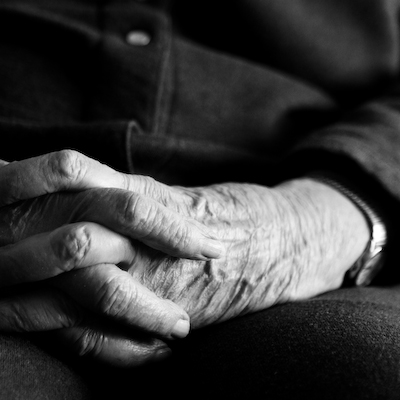
Inevitably the decisions about their care changes because of this.  It becomes necessary to consider quality of life instead of quantity of life.  What I mean is the goal of further treatment changes from trying to keep them alive to keeping them comfortable and content for the remainder of their lives.   It means as new or continuing health issues arise, we now ask ourselves what is the best treatment to keep them comfortable.  Thankfully my family is wonderful and the decision to change the focus of their care is agreed upon without arguments or hurt feelings.  Having helped too many families to count through this change in treatment, I know that my family is very fortunate to be blessed with this cooperation. Some families are on opposite sides of this fence.  Many times when children do not live nearby it is especially hard to understand this change in focus because they have not watched the aging of their parent first hand.  If you are the sibling that is the primary caregiver, you need to make every effort you can when changes in condition begin to keep in close contact with your brothers and sisters.   Explain the changes you are seeing, ask them for suggestions, tell them what the doctors are saying, and decide on treatment plans together.   You do not want to call them up one day and try to make them understand changes that have been progressing over time in just one phone call.  It will overwhelm them and they will become defensive and feel the need to protect their parent.


Keeping the lines of communication open through the aging process with those closest to you and your loved one will hopefully make these transitions easier on everyone.  Each of you may have different ideas about what quality of life may mean to you.  Allowing each person to express their thoughts enables everyone to hear all sides but try to keep in mind that just because your loved one is old it does not always mean that they are incapable of making these decisions themselves.  It is ultimately about what they want, not what you want...

Quality of care in the last stage of life = Aging with Ease!

Thursday, September 27, 2012

A Visit With My Grandmother


This weekend I was visiting my grandmother who now, at the age of 95, has recently moved into a skilled care setting.  I was sitting there talking with her and bringing her up to date on the happenings in our family as I frequently have to do when I go see her and it occurred to me that my grandmother is the essence of Aging with Ease.  She is the true inspiration for why I began writing and trying to help others.  She is the reason that I care and respect older adults the way that I do.  I have watched her progress from the vibrant person who would always be ready for play to the old woman who now mostly sits in her chair, content with her life and herself the whole way through.  It is her attitude toward life that has aided her the most in gracefully going through the aging process.

I can remember when I was 12 years old and my grandfather became ill with cancer.  I can clearly recall the way in which my grandmother cared for him with respect, love and laughter.  Never changing the way she loved him or how they communicated with each other.  It always stayed with me how she faced the reality of the situation head on, would tell you what she thought about it and then just simply do what needed to be done.  There was never a doubt in her mind, at least not that I saw, of what she should do, care for and love him.  Of course, she would be sad sometimes, but it never held her back; she seemed, to me, to gain strength from the hard times.

Not long after my grandfather passed away is when she decided it was time to sell her house and move to a retirement community, there was no changing her mind.  She knew she could no longer care for the house any longer and the memories that she shared with grandfather in the house that he built for her was just too much.  It was time to move on!  Our family would discuss with her other possible options besides living in a retirement community but her mind was set.  She would say: "This is what I want to do, I don't want to live with my children."  So everything was packed up and the house was sold.

My grandmother transitioned through every level of care within this retirement community over a span of about 18 years.  With every move, she accepted it with ease and trust that she would be taken of even though with every move she was slowly losing her sight, her hearing and eventually her mobility.  She never once doubted her faith or her family.  She would find laughter in the situation and was always so very grateful that we were there for her.   So thankful we were there to make sure that everything would be done the way she would want it and that the things that were most important to her stayed with her.

Now, as she sits in her favorite recliner, unable to see anymore and hardly able to move with out help, all she prays for is a peaceful end to her life.  Not because she is sad or depressed.  If you would meet my grandmother, you would know that she certainly is none of those things.  My grandmother even at the age of 95 could still be the life of a party.  She hopes for the end because she has lived her life to the fullest.  She has no regrets.  She has lead a happy and full life by having fun and helping others.  She is simply just tired, her body aches and she cannot do the things that she once did.

She has gone through the aging process with grace.  I can only hope to follow in her footsteps, even just a little.  In my work I have seen the direct result of negative attitudes on a person's health.  The mind is the most powerful tool you have in overcoming challenges in your life.  She showed me how to always look for something to laugh about, especially if it is about yourself.  She showed me to just let it go.  She showed me that if you can't change what is happening, then find a way to handle it but keep moving forward.

I am truly blessed to have had a person like this in my life.  I think there are probably many people that don't.  All you can do is be responsible for yourself and your own attitude.  You cannot change the way other people think or behave.  The most you can do is maybe make them laugh, which sometimes is all that they may need to improve their attitude, at least for a while...

Finding joy in your life is the essence of Aging with Ease!

  • When I originally made this post in November 2011, little did I know at the time that a few short months later my grandmother would get exactly what she was praying for.  She passed away on May 1, 2012.  Thanks to the wonderful nursing staff where she lived she died peacefully with a photo of my grandfather right beside her and her music playing, just the way she wanted it.  I miss her everyday!

Wednesday, August 22, 2012

A Story - End of Life

The care of someone who is reaching the end of their life is a difficult process to undergo no matter what their age is.  It is a time of self doubt, constantly asking yourself if you are making the right decisions, wondering if this is what your loved one would want.

Most of us do not think about reaching the end of our lives on a regular basis and what we would want if that time came upon us.  I know that I would want to die with dignity, without pain or discomfort, and surrounded by the people that I love.  In my experiences with helping patients and their families through this stage of life, they all want those things also.


This truly became apparent to me when I needed to provide care for my father-in-law at the end of his life.  I really did not know specifically what he wanted to be done, what his wish was for this last portion of his journey through life.  I was very close to him and tried to put myself in his shoes to try to figure out what I would want if it was me that this was happening to.  Not an easy place to put yourself! 

My father-in-law passed away rather quickly from cancer that had spread from his lung to his liver and to his brain.  His final diagnosis was established in late October 2008 and he passed away in our home in February 2009.  When we were first told the results of his tests, it seemed to me that he was ready to fight to live, but as I look back now at that time, I realize that he knew before the diagnosis was even confirmed that he was in the last stages of his life.  Even with that being said, he agreed to the treatments and followed all the instructions to the letter.  I think he did those things to give the people he loved time to deal and accept the situation that was at hand.  He would have discussions with me and his son (my husband) about certain aspects of possessions he had and wishes for those closest to him, but we never talked about what he wanted for himself when he was no longer able to communicate with us.

In the end, we brought him to our home to be cared for until his last day.  I was constantly second guessing myself.  Is this the right thing to do?  Is this what is best for my family?  Can I do this?  Nothing can prepare you for providing end-of-life care for someone so close to you.  People think that because I am a nurse and have helped many families through this process that it would somehow be easier for me.  I can assure you that having had the experience I had in my work only made it harder.  Having been through this process so many times before with people that were not my family, I knew all the stages and what to expect.  This was the one time in my life when I wished I was more ignorant.  I knew what it meant when the confusion set in.  I knew what it meant to start giving the morphine to control the pain.  I knew what it meant when he could no longer respond to us.  I knew what it meant when that very distinct smell arrived.  I knew what it meant when his breathing changed.  Knowing all these things only made it harder but also reassured me that there was no other place that he should be than with us. 

My father-in-law died with dignity, without pain and surrounded by the people that loved him.  With the help of Hospice, we were able to give him those things in our home, a place that was his second home, a place that he knew well and felt he belonged.

Was it the right thing for my family?  YES!  Was it the right thing to do?  YES!  Is this what he would have wanted?  YES!  Did we make the right decision?  YES!

I only hope that when I find myself in the last stage of my life that I am surrounded by the people that I love the most, that I die with dignity and that my death is peaceful.

Let your wishes be known to those that love you!  Help your family with making these decisions when you can't.  You are never too young to think about these things.  My father-in-law died at the age of 56.  Having some kind of direction from him about his end of life care would have been priceless to us. 

Five Wishes is a great tool for you to use to write down these wishes for your family and take some of the burden off of them.  I would have valued this information in the care of my father-in-law had I known of it then.
Click image to view
Aging with Ease includes preparing for the end of life, not only for yourself but to help your family know your wishes!